Selling Online in India: Marketplaces vs Your Own Online Store
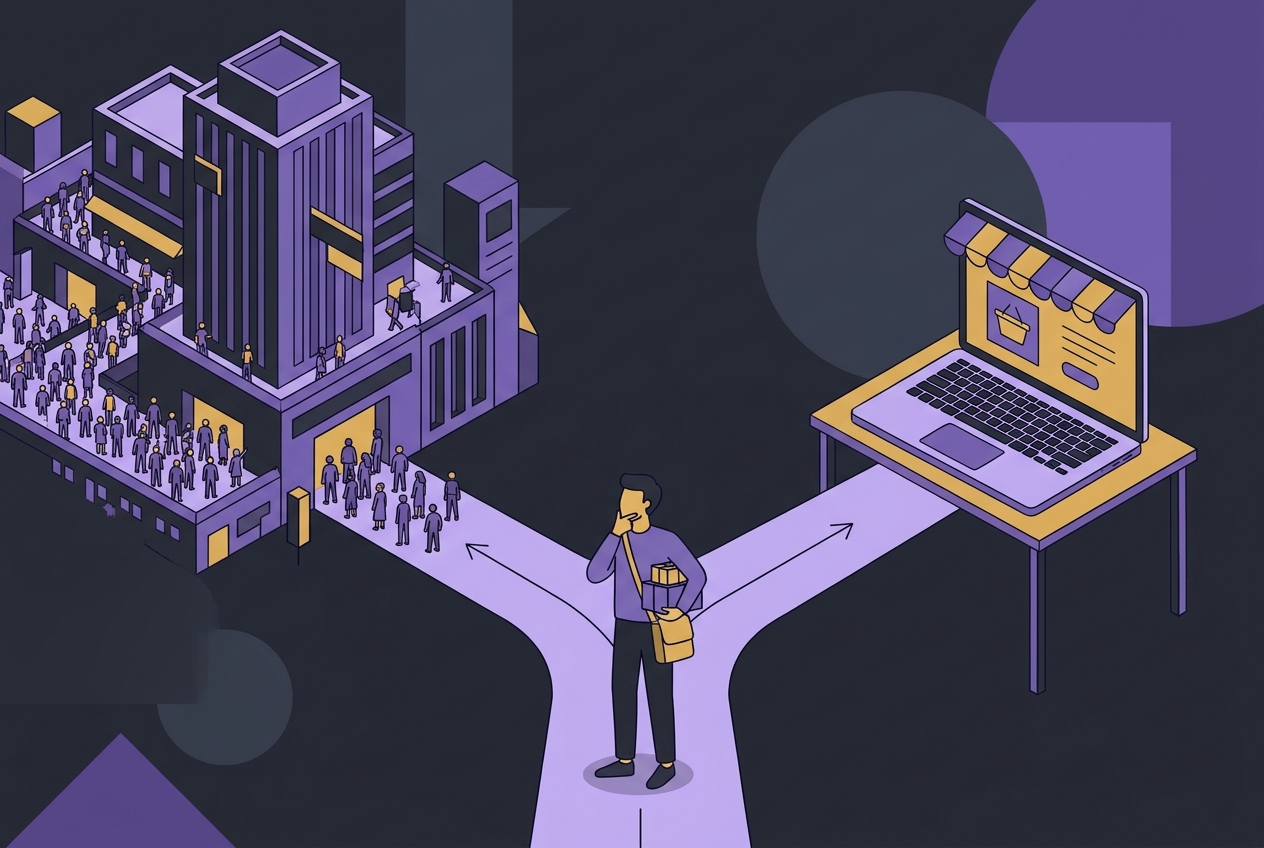
You have a product. People who see it in person buy it without much convincing. But online? You are not sure where to even begin. Do you list on Amazon? Open a Shopify store? Try Meesho? A friend says ONDC is the future. Your cousin swears by Flipkart. Everyone has an opinion and none of them agree.
This confusion is real, and it is costing you time and money. The good news is that the decision is not as complicated as it sounds once you understand what each option actually gives you, and what it quietly takes away.
Key Takeaways
What Does "Selling Online in India" Actually Mean Today?
When someone says "sell online," they usually mean one of three things: list on a marketplace, build your own website, or both. Each is a different business model, not just a different tool.
A marketplace like Amazon, Flipkart, Meesho, or Jiomart is like renting a stall in a busy mall. The footfall is already there. You just need to show up with a good product, decent photos, and a competitive price. The mall charges you rent, in this case, a commission that typically ranges from roughly 5% to 30% depending on the category and platform.
Your own online store, whether you build it on Shopify, WooCommerce, or through a custom ecommerce development setup, is like owning a shop on your own plot. Slower to build, but every customer who walks in belongs to you. You know their name, their order history, and you can message them again on WhatsApp or email.
ONDC (Open Network for Digital Commerce) sits in a third category. It is a government-backed open network where sellers list once and get discovered across multiple buyer apps. It is still growing, but it is particularly interesting for small retailers and hyperlocal businesses in tier-2 and tier-3 cities.
Marketplaces: The Real Pros and Cons
Let us be honest about what marketplaces do well. They solve the hardest problem in ecommerce: getting people to see your product. Flipkart and Amazon between them get hundreds of millions of visits every month. You tap into that without spending a rupee on ads to build awareness.
For a first-time seller, especially someone testing whether a product has demand, this is genuinely valuable. Take a small spice brand from Rajasthan wanting to test if their blends sell nationally. Listing on Amazon with good packaging and a few strong product photos costs very little to start and can answer the demand question quickly.
But the costs add up in ways that are not always obvious upfront.
What Marketplaces Cost You Beyond Commission
Meesho is worth a separate mention because it caters to a very different segment, social commerce, smaller towns, price-sensitive buyers. Margins are often thin, but volumes can be high. For commodity products this can work. For a brand trying to build perceived value, it is harder.
Why Your Own Online Store Changes the Game
Your own store will not give you traffic on day one. That is the honest truth. But it gives you something marketplaces never will: ownership.
Every customer who buys from your store is your customer. You have their phone number, their email, their address. You can send them a WhatsApp message when you launch a new product. You can run a festive season sale without asking anyone's permission or paying a platform fee. Over time, the economics of a direct-to-consumer sale are almost always better than a marketplace sale.
What an Own Store Actually Requires
Shopify is probably the most well-known platform internationally, and it does work in India. But WooCommerce on WordPress is often more cost-effective for small Indian businesses and gives you more flexibility. A good website development partner can help you decide based on your catalogue size and expected order volume.
Which Should You Choose First: Marketplace or Your Own Store?
This depends on where you are right now. Here is a simple way to think about it.
Start with a marketplace if:
Start with your own store if:
For most businesses, the honest answer is: build your own store while you also list on one or two marketplaces. Use the marketplaces for volume and discovery. Use your own store for repeat purchases, brand building, and better margins on loyal customers.
What About ONDC Sellers, Is It Worth Your Attention?
ONDC is different from both marketplaces and your own website. Think of it as an open infrastructure, like UPI was for payments, where any buyer app and any seller app can communicate with each other. A customer on Paytm or Magicpin can discover your product even though you never listed directly on either.
The fee structure is typically lower than traditional marketplaces. And because it is a government initiative, there is genuine policy support behind it.
That said, buyer adoption is still growing. ONDC works best right now for hyperlocal delivery, food, groceries, daily essentials, and for sellers in cities where buyer apps are actively promoting it. If you run a local grocery, a cloud kitchen, or a local pharmacy, ONDC deserves a serious look.
For a national D2C brand or a specialty products seller, ONDC is something to watch and test in parallel rather than your primary bet right now.
How to Drive Traffic to Your Own Store Without a Big Budget
Getting traffic to your own store is the part nobody warns you about when they say "just build a website." A website with no visitors is just a digital brochure.
Here is a realistic, cost-effective approach for a small Indian business:
Common Mistakes to Avoid
Frequently Asked Questions
How much does it cost to start selling online in India?
On a marketplace like Meesho or Amazon, you can start with very little, mainly your product inventory and basic packaging. For your own ecommerce store, expect to spend roughly ₹15,000–₹60,000 for a decent setup depending on whether you use a template-based solution or a custom build (these are approximate ranges and vary significantly by developer and requirements). Then budget separately for marketing to drive traffic.
Is Shopify a good choice for small Indian businesses?
Shopify works well and is easy to manage without technical knowledge. The trade-off is that monthly fees (billed in USD) and transaction fees can add up, especially at lower order volumes. WooCommerce on a good Indian hosting provider is often more economical at the small-business scale. The right choice depends on your technical comfort, catalogue size, and growth expectations.
Can I sell on Amazon India without GST registration?
For most product categories on Amazon India, GST registration is required before you can list. There are some limited exceptions, but practically speaking, if you are serious about selling on any major marketplace, getting GST registered is one of the first steps. It also builds buyer trust and is necessary for generating proper invoices.
What is the advantage of ONDC over regular marketplaces for small sellers?
ONDC is designed to reduce platform dependency and offer lower commission structures compared to established marketplaces. It also allows small sellers to be discovered across multiple buyer apps without managing separate listings on each. The practical advantage is greatest for hyperlocal businesses, kiranas, restaurants, local pharmacies, rather than national sellers right now.
How do I handle returns when selling from my own online store?
Set a clear, simple return policy and put it on your website before you launch, not after your first return complaint. Partner with a logistics provider that supports reverse pickup. Keep your return window realistic (7–14 days is common for most categories). Handling returns well is actually an opportunity: a customer whose problem you solved quickly is often more loyal than one who never had an issue.
Final Thoughts
There is no single right answer to the marketplace-versus-own-store debate. What matters is that you make a deliberate choice based on your margins, your product, and where your customers actually spend their time, rather than just following what someone else in your WhatsApp group is doing.
The businesses that do well online in India are usually the ones that start with one channel, learn it properly, and then expand. If you are ready to start selling online in India but want a clearer picture of which route fits your specific business, we would be happy to think through it with you. Reach out for a free consultation, no pressure, just a straightforward conversation.
More in Grow Business Online
How to Grow Your Business Online in India: A Practical Step-by-Step Guide
Read articleHow to Take Your Offline Shop Online Without Losing Walk-In Customers
Read articleGoogle Business Profile: How to Get Your Business on Google Maps and Get Calls
Read articleHow to Rank in 'Near Me' Searches: Local SEO That Brings Footfall
Read articleHow to Rank in 'Near Me' Searches: Local SEO That Brings Footfall
Read articleHow to Build a Business Website That Actually Brings Customers
Read articleBook a Free Consultancy Call
Get personalized advice from Brand Ur Business experts on the topics covered in this article