How to Grow Your Business Online in India: A Practical Step-by-Step Guide
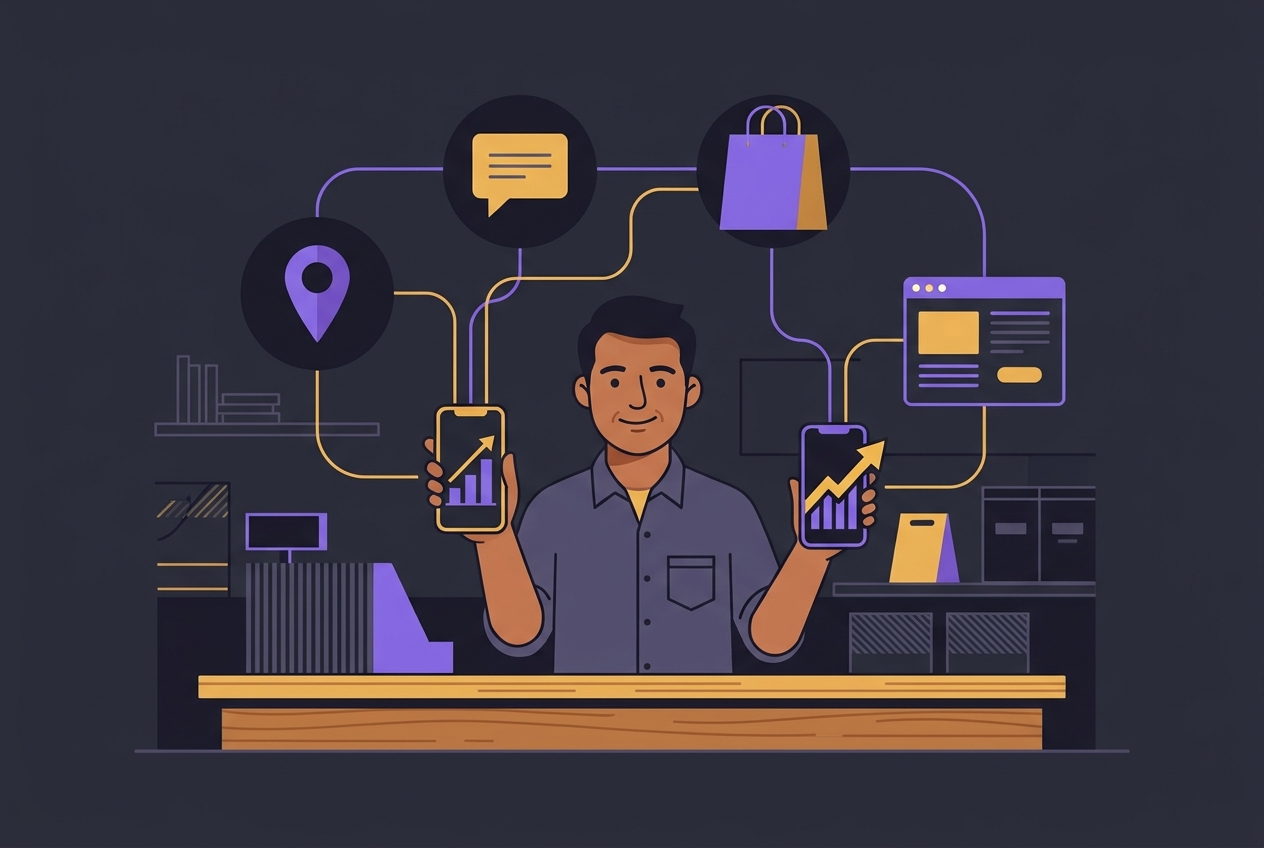
Most Indian business owners I talk to are not short on ambition. They are short on clarity. A kirana store owner in Nagpur knows his neighbour got orders through Instagram, so he opens an account, posts twice, hears nothing, and gives up. A clinic in Jaipur spends ₹15,000 on a website that gets zero visitors and concludes "digital doesn't work for us." The problem was never digital. The problem was no plan.
This guide is that plan. Whether you run a coaching centre, a textile wholesale business, a local restaurant, or a D2C product brand, the steps here apply. I will walk you through exactly how to grow your business online in India, in the right sequence, without wasting money on things that don't matter yet.
Key Takeaways
Step 1: Build a Foundation Worth Sending People To
Before you spend a single rupee on ads or social media, ask yourself this: if a stranger lands on your website or Google listing right now, would they trust you enough to call or buy?
A weak foundation means every rupee you spend on promotion is partially wasted. Your website needs to clearly say what you do, where you operate, who you serve, and how to contact you. That's the minimum. If you are not sure whether your current site meets that bar, check out our website development services to see what a business-ready site actually looks like.
What your foundation must include
That last point matters more than people realise. Indian customers overwhelmingly prefer messaging over filling a contact form. Give them the path of least resistance.
Step 2: Get Found on Google (Local and Organic Search)
Once your foundation is solid, you need people to actually find you. In India, that means Google. Whether someone in Pune searches "best CA near me" or a buyer in Surat types "fabric wholesaler indiamart", Google is almost always the starting point.
For local businesses, local SEO is your single highest-ROI channel in the first six months. Optimising your Google Business Profile, getting reviews from real customers, and making sure your NAP (name, address, phone) is consistent everywhere costs very little and delivers results that compound over time.
For broader reach, SEO services targeting product or service keywords in your category take longer (typically 4 to 6 months to show real traction) but attract buyers actively searching for what you sell. A tuition centre in Lucknow ranking on page one for "maths coaching class Lucknow" will get calls month after month without paying for each click.
A simple local SEO checklist you can do this week
What Kind of Website Does an Indian Business Actually Need?
This question comes up constantly, so let me answer it plainly. You do not need a fancy website. You need an effective one.
For most local service businesses, a 4 to 6 page website is enough: home, about, services, gallery or portfolio, testimonials, and a contact page with a Google Maps embed. For product sellers, you need an ecommerce development setup with proper product pages, payment gateway (supporting UPI is now mandatory in India), and order tracking.
The biggest mistake I see is owners spending ₹40,000 to ₹80,000 on a beautifully designed website that is not built for SEO, loads slowly on mobile, and has no clear call to action. Good design should serve the customer journey, not just look impressive in a screenshot.
How Do Google and Meta Ads Fit Into Your Online Growth Plan?
Organic growth takes time. If you need leads or sales in the next 30 to 60 days, paid advertising on Google and Meta is the right tool.
Google Search Ads put you at the top when someone types exactly what you offer. Take a dermatology clinic in Bhopal. If they run a Google Ad for "skin specialist Bhopal", they appear right when intent is highest. The visitor is already searching for a solution. Meta ads (Facebook and Instagram) work differently. They interrupt people who are not actively searching, so they work better for awareness, retargeting, or visually compelling products.
A reasonable starting test budget for Google Ads in a mid-size Indian city is approximately ₹15,000 to ₹25,000 per month. In metros or competitive categories (real estate, education, healthcare) you may need more. The key is to test with enough budget to get meaningful data, then optimise. Running ads at ₹3,000 a month and expecting results is like planting seeds and pulling them out after two days.
Why WhatsApp Marketing Is the Most Underused Tool for Indian Businesses
I want to spend a moment on this because it is genuinely one of the best channels available to Indian businesses and most owners treat it like a personal chat app.
WhatsApp marketing done right means building a list of opted-in customers and prospects, then sending them relevant updates: new products, festive offers (Diwali, Navratri, Eid season are huge), reminders, post-purchase check-ins, and reorder nudges. A saree retailer in Varanasi sending a WhatsApp broadcast to 400 regular customers before Dussehra is doing marketing that most digital agencies would charge heavily to replicate.
The conversion rates on WhatsApp are significantly higher than email in the Indian context because people actually open and read their messages. Keep broadcasts genuinely useful, not spammy. Respect opt-outs. Build trust over time.
How to Use Social Media Without Wasting Hours Every Week
Social media confuses a lot of business owners because it feels like it should be free and easy, and then it becomes a full-time job that produces no measurable results.
Here is a realistic view. Social media marketing works best when you pick one or two platforms where your customers actually spend time. A B2B manufacturer in Coimbatore may find LinkedIn and IndiaMART more productive than Instagram. A bakery in Bengaluru will do far better on Instagram and Zomato than on Twitter/X.
A practical social media approach for small businesses
Video marketing deserves a specific mention here. Short videos of your product being made, your service being delivered, or a customer sharing their experience are among the highest-performing content types on Instagram Reels and YouTube Shorts right now. You do not need professional equipment. A clean background and decent lighting from a window is enough to start.
Which Channels Should You Focus on First?
With so many options, this is the question I get most often. The honest answer is: it depends on your business type, your budget, and your timeline. But here is a rough framework.
If you need results in 30 days: run Google Search Ads for high-intent keywords and set up a WhatsApp Business catalogue.
If you have 3 to 6 months and a modest budget: invest in local SEO, Google Business Profile optimisation, and organic social content.
If you are building for the long term: combine SEO, content marketing, email or WhatsApp nurturing, and gradually scale paid channels based on what converts. Content marketing in particular builds authority in your category over time, something no ad budget can replicate.
Common Mistakes to Avoid
Frequently Asked Questions
How much does it cost to grow a business online in India?
It varies widely by category and city, but a realistic starting range for a small business doing digital marketing properly is approximately ₹15,000 to ₹40,000 per month covering a basic website, local SEO, and either paid ads or social media management. You can start smaller with just a Google listing and WhatsApp, then reinvest as you see returns. The mistake is spending nothing and expecting results, or spending heavily without a clear plan.
How long does it take to see results from digital marketing in India?
Paid ads can generate enquiries within days of going live if set up correctly. SEO and organic social media typically take 3 to 6 months to build meaningful traction. Local SEO for a Google Business Profile can show results in 4 to 8 weeks with consistent effort. Be sceptical of anyone promising instant organic results.
Can a small or local business in a tier-2 or tier-3 city really grow online?
Absolutely, and in some ways it's easier there. Competition for local keywords in smaller cities is far lower than in metros. A hardware store in Raipur or a private hospital in Nashik can reach page one of Google in a few months with focused effort. The internet does not have a preference for big cities.
Do I need a website if I already have an Instagram page and a WhatsApp number?
A social media page is rented space. Instagram can change its algorithm, suspend your account, or reduce your reach at any point. A website is an asset you own. It also ranks on Google, builds credibility with first-time visitors, and gives you a central place to link everything. Think of Instagram as a way to attract attention and your website as the place where trust is built and conversions happen.
What is the biggest factor that separates businesses that grow online from those that don't?
Consistency and follow-through. The businesses I see grow reliably are not always the ones with the biggest budgets. They are the ones who show up regularly, respond to customers quickly, ask for reviews, keep their listings updated, and treat digital as an ongoing part of running the business, not a one-time experiment.
Final Thoughts
Figuring out how to grow your business online in India is not about finding some secret tactic. It is about doing the fundamentals well, in the right order, and sticking with it long enough to see compounding results. Start with your foundation, get found on Google, pick one or two promotion channels that match your business type, and measure what is working.
If you are not sure where to start or you have tried a few things and not seen results, sometimes a second pair of eyes makes all the difference. Feel free to reach out for a free consultation with the Brand Ur Business team. No pressure, just an honest look at where you are and what is actually worth doing next.
More in Grow Business Online
How to Take Your Offline Shop Online Without Losing Walk-In Customers
Read articleGoogle Business Profile: How to Get Your Business on Google Maps and Get Calls
Read articleHow to Rank in 'Near Me' Searches: Local SEO That Brings Footfall
Read articleHow to Rank in 'Near Me' Searches: Local SEO That Brings Footfall
Read articleHow to Build a Business Website That Actually Brings Customers
Read articleHow to Grow a Small Business Online on a Tight Budget
Read articleBook a Free Consultancy Call
Get personalized advice from Brand Ur Business experts on the topics covered in this article