Google Ads for Small Business: Budget, Setup, and Costly Mistakes to Avoid
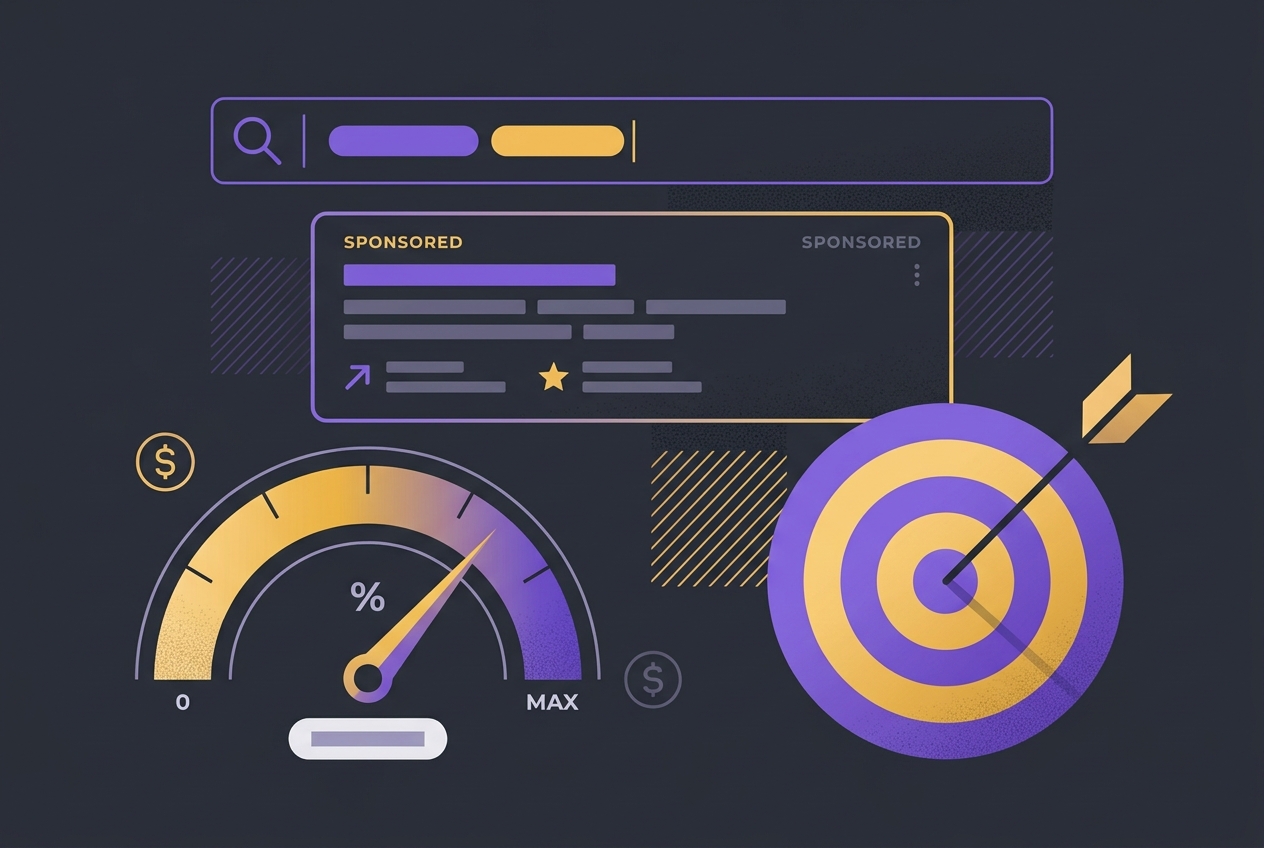
You've probably heard someone say "I tried Google Ads and it was a total waste of money." I hear this every other week from shop owners, clinic managers, and coaching centre founders across India. And almost every time I dig into their account, the issue is the same: broad keywords eating the budget, no negative keywords, and clicks landing on a homepage with zero call to action.
The platform itself is not the problem. Google Ads for small business is genuinely one of the fastest ways to get in front of someone who is already searching for what you sell. The trick is knowing how to set it up, what to spend, and what to avoid. This guide covers all three.
Key Takeaways
What Does Google Ads Actually Cost in India?
This is the question every business owner asks first, and fairly so. Google Ads cost in India is auction-based, which means you pay whatever the competition around you is willing to bid. There is no fixed rate.
As a rough rule of thumb: local service businesses in tier-2 and tier-3 cities, think a dental clinic in Nashik or a CA firm in Coimbatore, often see cost-per-click (CPC) in the ₹20–₹80 range. Competitive categories like personal loans, real estate, or MBA admissions can push CPC above ₹150–₹300 easily. E-commerce product searches usually fall somewhere in between.
A reasonable starting test budget for a small business is ₹300–₹500 per day (approximately ₹9,000–₹15,000 per month). That gives you enough clicks to actually learn something in 30 days without betting your entire marketing spend on one experiment. If your average order value or lifetime value of a customer is high, say you run a wedding photography studio, you can justify spending more per click because one converted customer pays back the campaign many times over.
Do not let anyone promise you a specific cost-per-lead before the campaign has run for at least two to three weeks. Anyone who does that is guessing.
How to Set Up Your First Search Ads Campaign
Setting up Google Ads is not technically hard. The interface walks you through it. What trips people up is the *strategy* inside the setup. Here is a step-by-step sequence that works for most small businesses.
Step 1: Define One Goal First
Pick one outcome, phone calls, form fills, store visits, or purchases. Do not try to achieve all of these at once in your first campaign. One goal means you can measure success clearly.
Step 2: Choose Tight, Intent-Driven Keywords
Use phrase match or exact match keywords, not broad match. If you run a packers and movers business in Jaipur, target "packers and movers in Jaipur" not just "movers." Google's broad match will otherwise show your ad to someone searching "mover movies OTT", yes, this happens.
Step 3: Build a Negative Keyword List Before You Launch
Add terms like "free," "jobs," "salary," "DIY," "how to," and any competitor names you do not want to pay to attract. This single step can cut wasted spend by 20–30% in the first month, rough estimate based on typical small account audits I have done.
Step 4: Write Ads That Match the Search
Your headline should echo what the person searched. If someone types "best coaching centre for UPSC in Lucknow," your headline should say something like "UPSC Coaching in Lucknow, Batches Starting Soon." Match the language, match the intent.
Step 5: Send Traffic to a Dedicated Landing Page
Do not send paid clicks to your homepage. Build or use a page that has one focus: the product or service the person searched for, a clear benefit, and one action to take, call, WhatsApp, or fill a form. If your website is not built for conversions, fix that before you spend a rupee on ads.
Step 6: Enable Call Extensions and Location Extensions
If you have a physical location, set up your Google Business Profile and link it. Add your phone number as a call extension. Many Indian customers, especially in tier-2 cities, will call directly from the ad rather than clicking through to a website. Make that easy.
Step 7: Set a Daily Budget Cap and Review After 7 Days
Start with your daily cap firm. Do not touch the bids for the first week, let the system gather data. After seven days, look at which keywords are getting clicks and which are wasting money, and make your first round of cuts.
How Much Google Ads Budget Is Right for Your Business?
Your Google Ads budget should be tied to the math of your business, not to what feels comfortable. Here is a simple way to think about it.
If your average profit per new customer is ₹3,000, and you are willing to spend ₹1,000 to acquire one customer, then a ₹10,000/month budget needs to generate at least 10 new customers to break even. If your landing page converts at 5% (meaning 1 in 20 clicks becomes a lead) and your sales team closes 1 in 4 leads, you need 80 clicks to get one customer. At ₹50 CPC, that is ₹4,000 per customer, too expensive for your target. So either improve the conversion rate, raise your acceptable acquisition cost, or find lower-CPC keywords.
This kind of back-of-the-napkin math saves you from under-budgeting (not enough data) or over-spending before the system is tuned. Our paid advertising services always start with this calculation before we touch the platform.
Why Is My Google Ads Campaign Not Getting Results?
This question comes up constantly. Nine times out of ten, one of four things is happening.
First, the keywords are too broad. You are paying for curiosity traffic, not buying-intent traffic. Second, the ad and the landing page do not match, the person clicks expecting one thing and finds something else. Third, the campaign is running on Google's default settings, which are designed to spend your budget fast, not efficiently. Smart campaigns and "optimized" settings often serve display and YouTube impressions that eat budget without delivering intent-driven clicks. Turn off the Search Partners and Display Network expansion unless you specifically want them.
Fourth, and this one surprises people, the business area is just too competitive for the budget. If you are a new real estate developer in Mumbai bidding on "2BHK flats in Andheri" with ₹500/day, you will not get meaningful impressions because established developers are bidding ₹500 per click. In cases like that, local SEO and Google Maps optimisation may deliver better ROI while you build up.
Which Campaign Type Should Small Businesses Use?
For most small businesses starting out, Search campaigns are the safest bet. You show up when someone is actively searching. There is no guess work about whether they want what you sell.
Performance Max campaigns can work, but they need conversion data to optimise well. If you have fewer than 30–50 conversions per month, PMax will not have enough signal and you will often see your budget going to irrelevant placements.
Display campaigns are better for brand awareness than for direct conversions at the small business level. They can work well for remarketing, showing ads to people who already visited your website, which is a cost-effective tactic once your traffic volume is reasonable.
Take a sweet shop in Indore running Search Ads for "premium mithai delivery Indore" during Diwali. That is a specific intent, a limited geography, a clear seasonal window, and a high-purchase-intent keyword. That campaign will almost always outperform a display campaign targeting "food lovers in Indore" because the intent signal is so much stronger.
How Does Google Ads Compare to Facebook or Instagram Ads for Small Businesses?
Both platforms have a place. Google Search Ads capture existing demand, someone already wants what you sell and is looking for it. Meta Ads (Facebook and Instagram) create demand, you put an offer in front of someone who might not have been looking yet.
For businesses where people actively search, dentists, lawyers, tutors, plumbers, event venues, Google Ads usually wins on conversion intent. For businesses where the product needs to be seen to be desired, fashion, food, home decor, beauty, Meta Ads often perform better because visual content drives the purchase decision.
Many successful small businesses in India run both together. You can even use Google Ads for high-intent keywords and then retarget those non-converting visitors on Instagram. If you want a side-by-side look at how to plan this, our paid advertising page covers both channels.
Common Mistakes to Avoid
Frequently Asked Questions
Is Google Ads worth it for small businesses in India?
Yes, for the right kind of business. If people are already searching for your product or service on Google, and most are, then Google Ads puts you at the top of those results immediately. The key is matching your budget to realistic expectations and setting up the campaign correctly from day one.
How much should I spend on Google Ads per month as a small business?
A sensible starting range is ₹9,000–₹15,000 per month, which gives you roughly ₹300–₹500 per day. That is enough to collect data, identify what works, and make informed decisions. Very competitive industries may need more to be visible at all.
Can I run Google Ads myself or do I need an agency?
You can absolutely run them yourself if you invest time in learning the platform. The risk is the learning curve costs you real money while you figure things out. Many small business owners find that hiring a professional for the first three months, and then managing themselves with a good foundation, is the most cost-effective path.
How long does it take to see results from Google Ads?
You can see clicks and impressions on day one. Meaningful results, enough data to judge performance and optimise, typically take two to four weeks. Sustained, profitable performance usually takes two to three months of iterative improvement.
What is a good click-through rate (CTR) for a small business Google Ads campaign?
For Search campaigns, a CTR of 3–6% is a reasonable benchmark across most industries. Some high-intent, branded keywords will do much better. If your CTR is below 1–2% consistently, your ad copy is likely not matching what searchers are looking for.
Final Thoughts
Google Ads for small business is not a magic tap you turn on and watch money pour out. It is a tool, powerful when handled with care, expensive when treated carelessly. The businesses that get the most out of it are the ones that start focused, track everything, and keep improving based on real data rather than assumptions.
If you are not sure where to begin, or you have run campaigns before and they just did not deliver, sometimes a fresh set of eyes makes all the difference. Feel free to reach out to us at Brand Ur Business for a free consultation, no pressure, just an honest look at whether Google Ads makes sense for where you are right now.
More in Grow Business Online
How to Grow Your Business Online in India: A Practical Step-by-Step Guide
Read articleHow to Take Your Offline Shop Online Without Losing Walk-In Customers
Read articleGoogle Business Profile: How to Get Your Business on Google Maps and Get Calls
Read articleHow to Rank in 'Near Me' Searches: Local SEO That Brings Footfall
Read articleHow to Rank in 'Near Me' Searches: Local SEO That Brings Footfall
Read articleHow to Build a Business Website That Actually Brings Customers
Read articleBook a Free Consultancy Call
Get personalized advice from Brand Ur Business experts on the topics covered in this article