Email and SMS Marketing: How to Turn One-Time Buyers into Repeat Customers
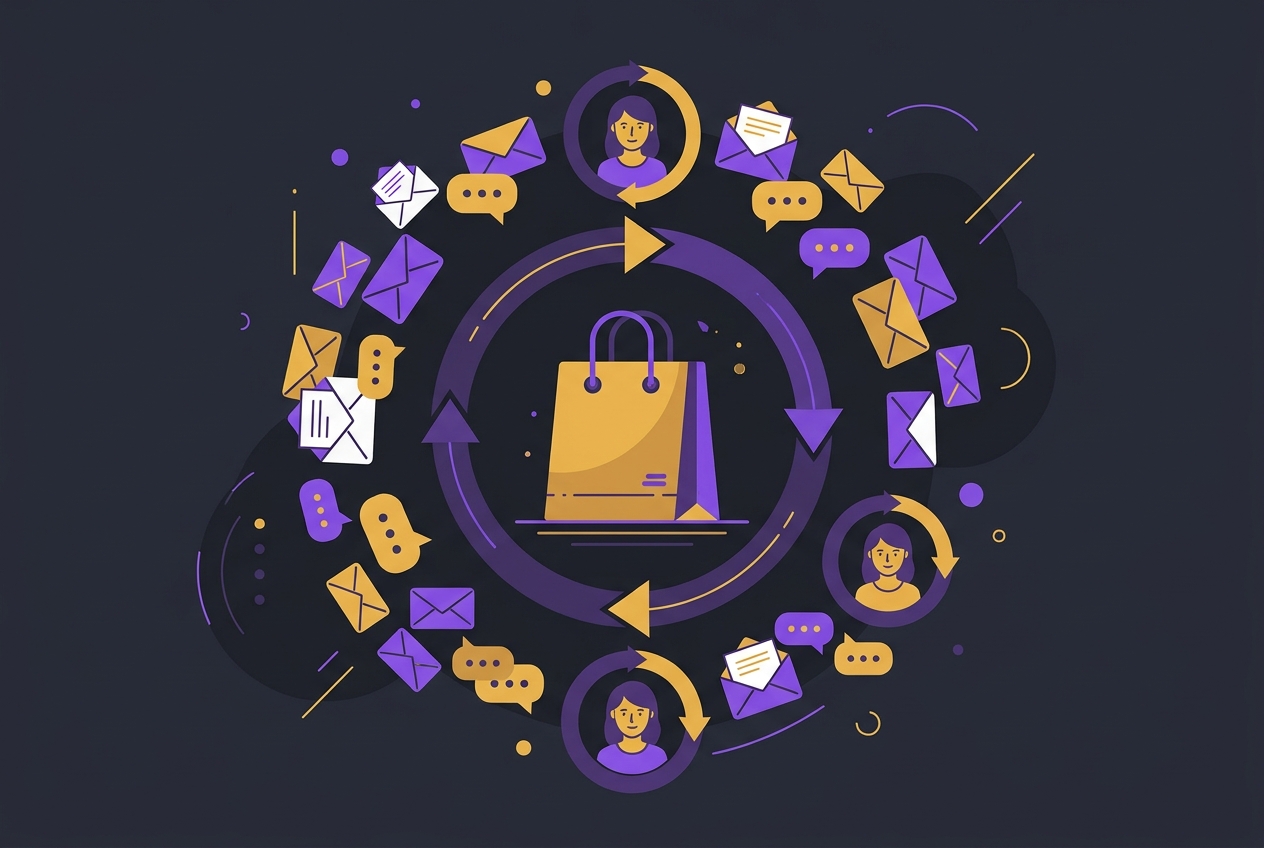
You spend real money to get a customer through the door, whether that is a Google ad, a pamphlet, or word of mouth. They buy once. Then they vanish. And next month, you are back to spending money on fresh leads again.
This cycle is exhausting and expensive. The fix is not more advertising. It is a simple, consistent system that keeps your existing customers warm. Email marketing and SMS marketing are that system.
Key Takeaways
Why Most Small Businesses Lose Customers After the First Sale
The honest answer is neglect. Not intentional neglect, just the busyness of running a business. You serve the customer, collect payment, and move on to the next one. Nobody follows up.
From the customer's side, it is not that they disliked you. They just forgot. Another brand showed up in their feed, a neighbour recommended someone else, or they simply did not think of coming back because you gave them no reason to. That is a retention problem, not a product problem.
The businesses that grow steadily are not always the ones with the best product. They are often the ones that communicate consistently. A medical diagnostic centre in Nagpur that sends you a reminder before your annual health checkup is top of mind when you need that service. A clothing boutique in Surat that messages you before Diwali about their new collection gets first consideration. Communication is the habit you need to build.
What Is the Difference Between Email and SMS Marketing?
They are not the same channel, and they should not be used the same way.
Email gives you space. You can share a story, a product catalogue, a how-to, a behind-the-scenes update. Emails are opened when the person has a moment to read. They work well for building trust, sharing value, and nurturing a relationship over time. Open rates vary widely, but permission-based email to a warm list performs significantly better than cold outreach.
SMS is immediate. A message sent at 11 AM is usually read within minutes. It is short, it is direct, and it demands little from the reader. Use SMS for flash sales, appointment reminders, order confirmations, restock alerts, and urgent offers. The limitation is that you have no room for nuance.
WhatsApp sits in between. It supports images, PDFs, and voice notes, and given how most Indians communicate, it has a familiarity that email sometimes lacks. If you want to explore that channel specifically, our WhatsApp marketing service covers it in detail. For this post, we are focusing on email and SMS as a pair.
How to Build an Email and SMS List the Right Way
This is the part most businesses skip. They try to start sending before they have a proper list, and then wonder why nothing works.
Collect contacts at every touchpoint
Keep it clean
Only add people who have actively opted in. A small list of 500 genuine customers beats a purchased list of 50,000 strangers every time. Bulk SMS blasting to bought lists burns money and damages your sender reputation.
How to Structure Your First Email and SMS Campaign
You do not need a complex marketing automation tool on day one. Start simple.
The three messages every small business should send
These three alone can make a visible difference to repeat purchase rates without needing expensive software.
Which Platforms and Tools Work Well in India?
The global tools work, but a few are worth calling out specifically for the Indian market.
For email, Mailchimp has a free tier that works for lists under 500 contacts. Zoho Campaigns (made in India, good regional support) is a strong option as your list grows. Sendinblue (now Brevo) is worth considering for its combined email and SMS features.
For SMS, platforms like MSG91, Textlocal (now Vonage), and Kaleyra are widely used in India. They support DLT registration, which is now mandatory under TRAI regulations, make sure whatever platform you use helps you with DLT compliance, or your messages will not go through.
Budget-wise, a reasonable starting monthly spend on a combined email and SMS tool for a small business is approximately INR 1,500 to INR 5,000 per month, depending on list size and volume. That is a rough guide, not a quote, actual pricing varies by platform and plan.
How Festive Seasons Change the Email and SMS Game
India runs on a festive calendar. Diwali, Eid, Holi, Christmas, Navratri, Pongal, Onam, every region has its own rhythm of celebrations when buying intent shoots up. This is a structural advantage for businesses that maintain a list.
A skincare brand in Delhi can run a targeted Karva Chauth gifting campaign to their female customer segment. A coaching institute in Patna can send a New Year "new batch starting" SMS to everyone who enquired last year. An apparel manufacturer on IndiaMART can email their retail buyers before the summer season with their new catalogue.
The key is to plan ahead. Map out the three or four festive moments most relevant to your business and prepare your messages a month in advance. Rushed campaigns feel rushed.
Also, if a significant portion of your customers are more comfortable in a regional language, Hindi, Tamil, Telugu, Bengali, Marathi, consider sending at least some messages in that language. A Marathi message from a local pharmacy in Pune lands very differently than a generic English SMS. It signals that you actually know your customer.
Common Mistakes to Avoid
Frequently Asked Questions
How often should a small business send marketing emails?
For most small businesses, once or twice a month is enough to stay relevant without annoying people. If you have genuinely useful content, a new product, a seasonal offer, a helpful tip, you can go weekly. The test is simple: would your customer feel the email was worth opening, or would they feel interrupted?
Is SMS marketing still effective in India in 2025?
Yes, particularly for transactional messages, appointment reminders, and time-sensitive offers. SMS open rates remain very high compared to email because the inbox is less cluttered. The key is to keep messages short, clear, and genuinely relevant to the recipient.
What is a good open rate for email marketing for small business?
A well-maintained, permission-based list for a small local business can realistically see open rates of 25% to 40%. Industry averages vary, but the more local and personal your list, the better your engagement tends to be. Generic newsletters to cold lists often see single-digit open rates.
Do I need to hire someone to run email and SMS marketing?
Not necessarily, at least not to get started. The basic three-message sequence described above can be set up in a few hours using a tool like Mailchimp or Zoho Campaigns. As your list and ambition grow, having a professional manage segmentation, A/B testing, and campaign calendars makes sense, and the returns usually justify the cost.
How does email marketing work alongside other digital marketing efforts?
It works best as part of a connected system. Paid advertising drives new visitors to your website or landing page; your website captures their contact details; email and SMS nurture them into repeat buyers. Local SEO brings in organic traffic that also feeds your list. Think of email and SMS as the layer that holds everything else together.
Final Thoughts
Getting a customer once is hard work. Losing them to inactivity after that is just wasteful. Email and SMS marketing are not complicated, they are just consistent communication with people who already like what you do.
Start with a clean list, three well-crafted messages, and the discipline to send them reliably. Then layer in festive campaigns, segmentation, and a bit of regional language where it fits. You will see repeat purchase rates climb without spending another rupee on paid acquisition. If you want help building this system properly, the list, the copy, the automation, we are happy to talk. Book a free consultation with the Brand Ur Business team and we will figure out what makes sense for your business specifically.
More in Grow Business Online
How to Grow Your Business Online in India: A Practical Step-by-Step Guide
Read articleHow to Take Your Offline Shop Online Without Losing Walk-In Customers
Read articleGoogle Business Profile: How to Get Your Business on Google Maps and Get Calls
Read articleHow to Rank in 'Near Me' Searches: Local SEO That Brings Footfall
Read articleHow to Rank in 'Near Me' Searches: Local SEO That Brings Footfall
Read articleHow to Build a Business Website That Actually Brings Customers
Read articleBook a Free Consultancy Call
Get personalized advice from Brand Ur Business experts on the topics covered in this article